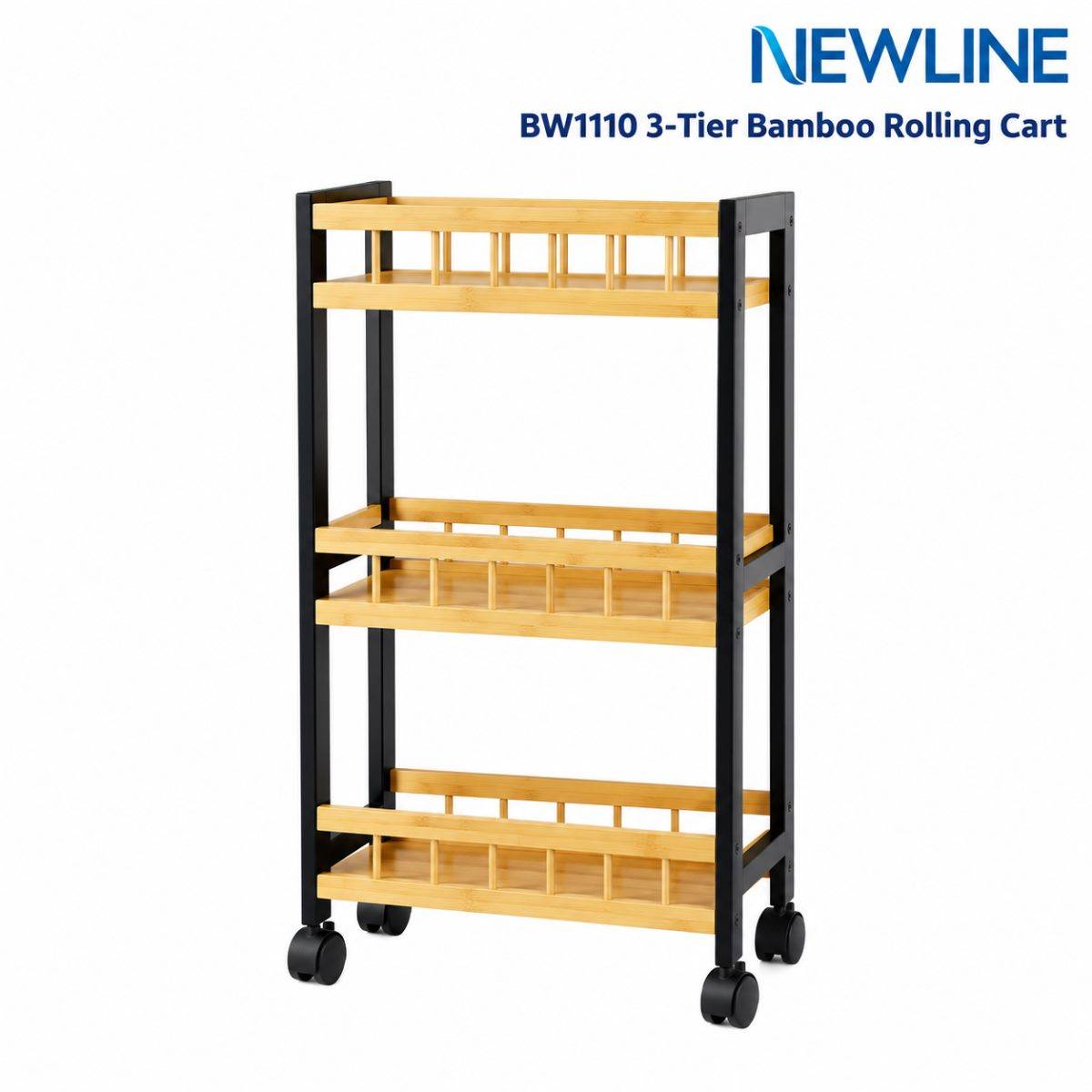
BW1110 3-Tier Bamboo Rolling Cart
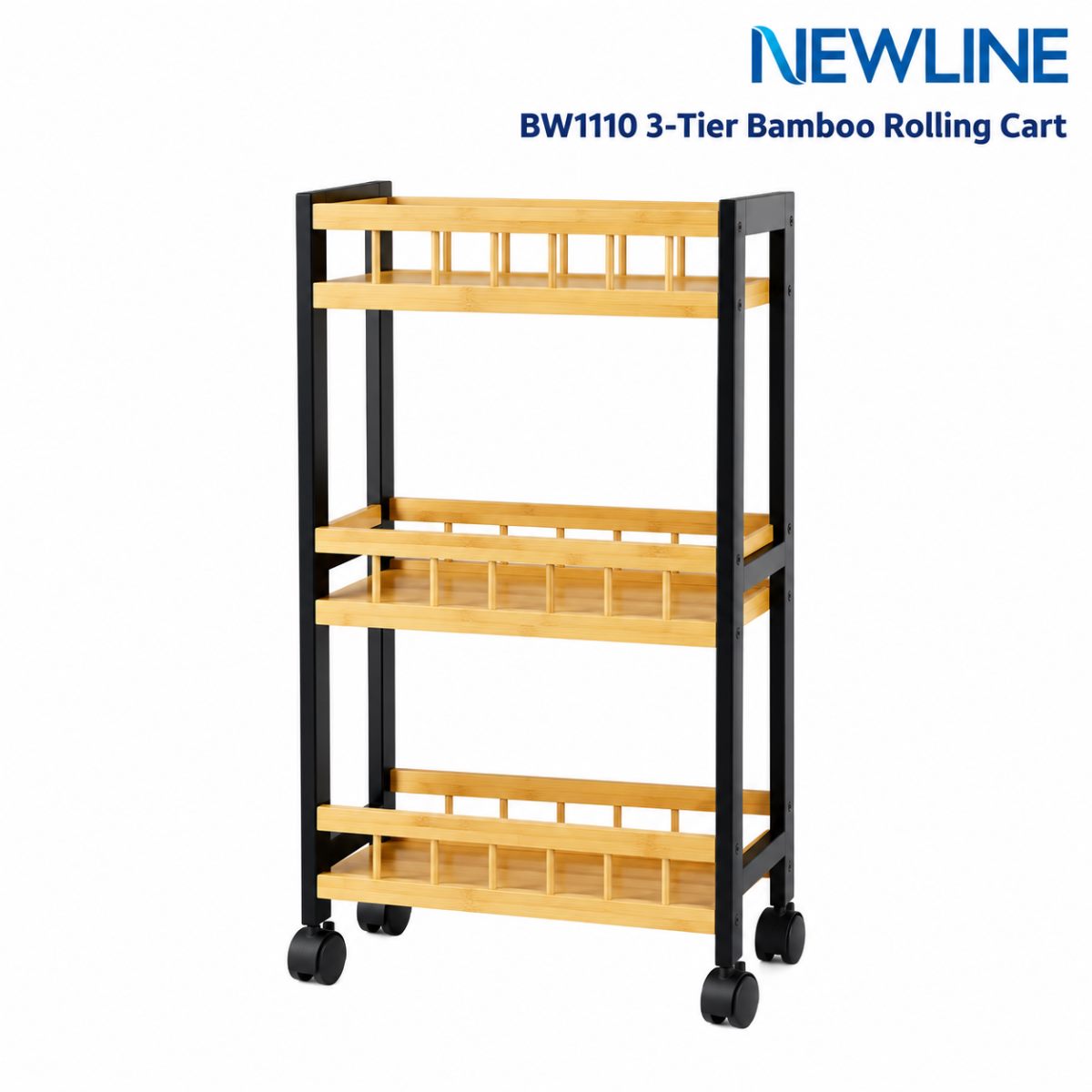
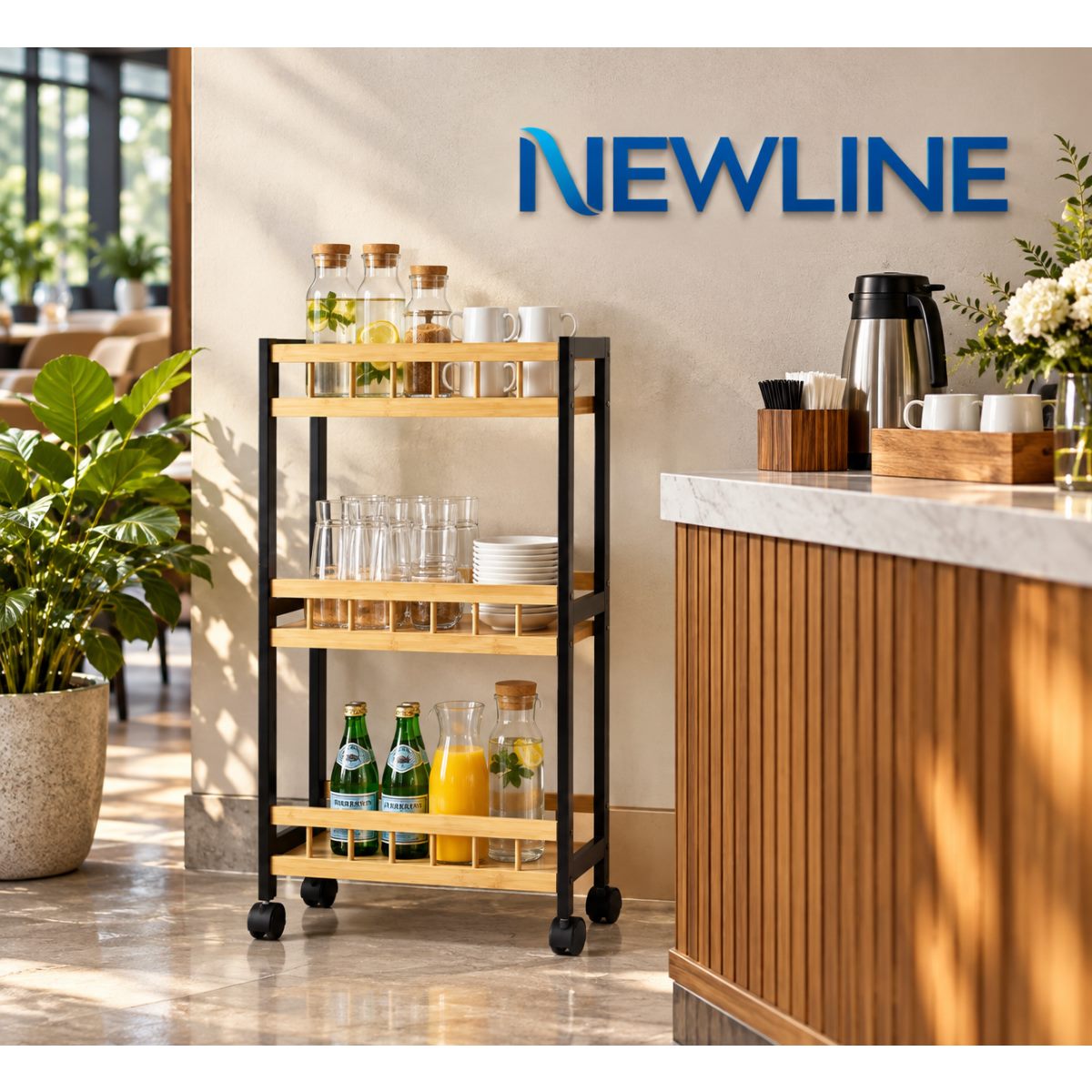
Buyer brief. BW1110 is a narrow three-tier rolling cart with a black frame, bamboo shelves with raised rails and four casters. The vertical layout uses limited floor width while separating bottles, produce, cups, pantry items or service supplies.
Where a three-tier format fits
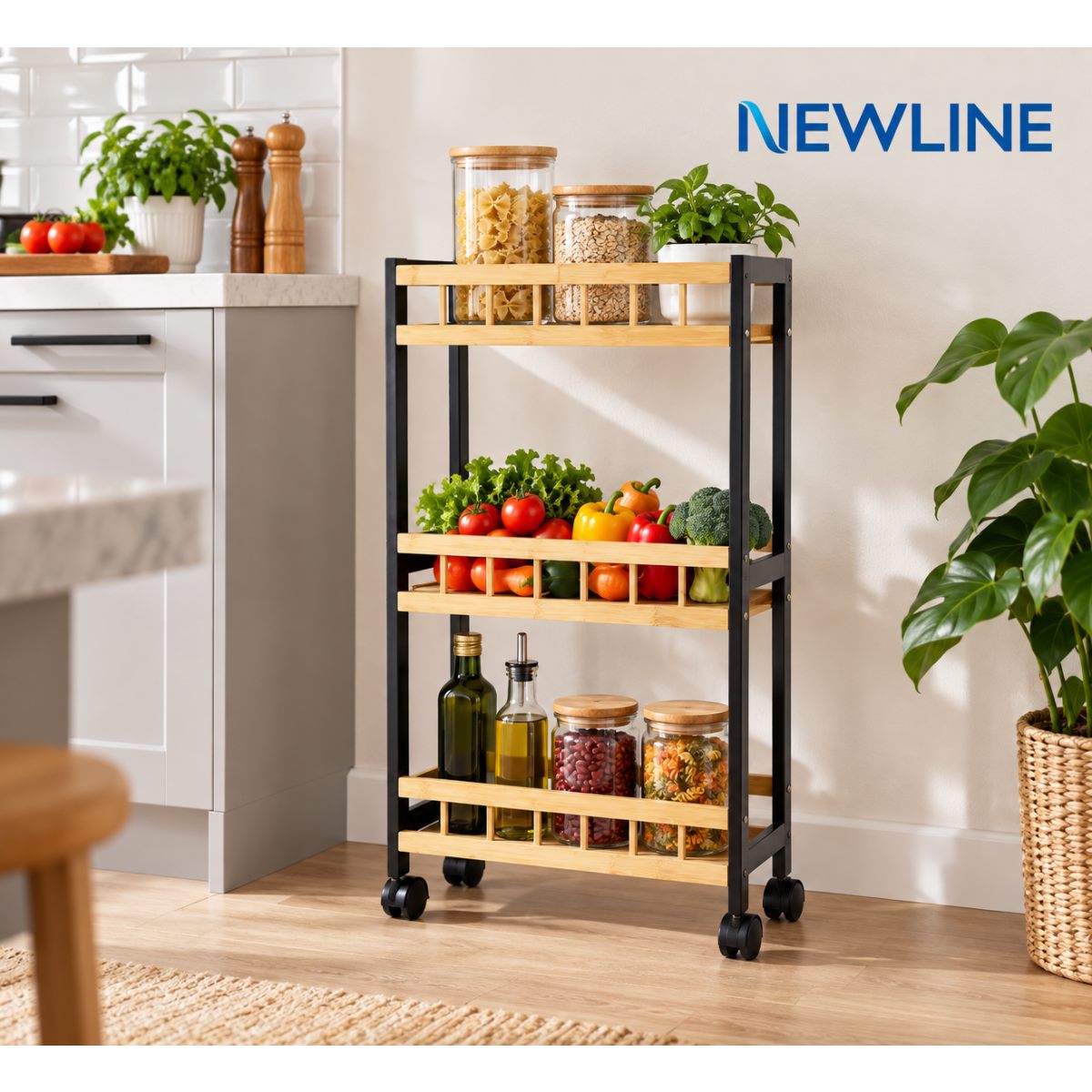
Start with the tallest item in the planned assortment. A bottle may stand between two shelves yet still be awkward to lift over the front rail. The useful measurement is therefore not just shelf spacing: leave room for a hand and for the angle needed to remove the bottle. The open top avoids that overhead restriction, making it a sensible place to demonstrate jars during a retail presentation.
BW1110 can be considered for a pantry corner or beside a kitchen counter, but measure the route out of that space as well as the space itself. A cart that fits when parked still needs room to turn. On the sample, check the casters at their widest swivel position. Neither a photograph nor the word “narrow” establishes the clearance available in a customer's kitchen.
Contact NEWLINE bamboo storage cart wholesale supplier for more details

How to brief a bamboo storage cart manufacture
Share the expected use before discussing price. A kitchen retailer may want shelf spacing for jars and vegetables. A hospitality buyer may need clearance for bottles, cups or a tray. State the destination market, first quantity, annual estimate, desired finish, logo position and packing format in one RFQ.
For a private-label brief, decide whether the existing layout is the starting point or whether the shelves need redesigning. A packaging change is a different job from changing the distance between tiers. List any proposed changes to rail height, shelf depth, colour or wheels separately and ask which are feasible. This gives a bamboo storage cart manufacture a defined version to price, without treating every requested variation as an already available option.
Comparing wholesale offers
A bamboo storage cart wholesale supplier should disclose the assumptions behind the unit price. Ask whether assembly, wheel installation, individual protection, carton marks, instruction sheets and export cartons are included. Request prices at the planned quantity and the next volume break, then compare carton cube and handling as well as factory price.
Ask to see the sample being unpacked. Where are the loose parts? Can a wheel or hardware bag touch a finished shelf? A photograph of the closed carton will not answer either question. For a proposed flat-pack version, the quotation needs to identify the parts, tools and instructions supplied. If the unit arrives assembled instead, ask how the packing stops it moving inside the box. Do not assume both shipping formats are available until the supplier has agreed the construction and packing plan.
Materials and retail presentation
The contrast between natural bamboo and the dark frame is part of BW1110’s visual identity. Grain direction, shelf colour and coating should be checked on a physical sample. If the programme needs a darker bamboo tone or a coloured frame, approve the pairing under the lighting used by the target retailer.
Branding is most useful when a shopper can see it without obscuring the shelves. The upper rail, frame side or package can each be considered. Confirm artwork size, logo method and colour reference on the real surface. Keep an approved sample and its drawing revision for repeat production so a new batch does not drift from the launch range.
Practical quality review
Place the assembled sample on a level floor before adding display items. Check whether it sits evenly, then try the wheels in more than one direction. Note a stiff wheel or a fixing that works loose instead of recording only “rolling test passed.” The test load and procedure need to be agreed with the supplier; this page does not give a verified shelf or total weight rating.
The rails deserve a closer look too. Examine the small upright pieces, their attachment points and the edges a hand may touch when reaching for a jar. Record the location of a rough edge or visible gap on a photograph. Specific notes let the sample team correct a particular part instead of guessing what “improve quality” means.
Before a reorder, compare the new quotation with the earlier approved version. A substituted caster can alter the overall height, while a different finish may change the appearance beside other bamboo products. Ask for proposed substitutions in writing. Keep one reference sample labelled with its approval date, and save the carton artwork separately so an address or barcode update does not get confused with a product change.
Specification guide
| Item | Buyer decision |
|---|---|
| Structure | Black frame, three bamboo shelves with raised rails and four casters; confirm dimensions from approved drawing. |
| Use | Kitchen gap storage, café service, hotel pantry, bottle display or small-space retail range. |
| Branding | Logo method, size, colour and position reviewed on the production sample. |
| Packing | Assembled or flat-packed format, shelf protection, caster protection and carton marks confirmed before order. |
Frequently asked buyer questions
| Question | Answer |
|---|---|
| Can shelf spacing be changed? | Review the required jar, bottle or tray height on a marked drawing before sampling. |
| Can the cart be made wider? | Possible revisions should be checked for frame stability, wheel clearance and carton size. |
| What caster specification is supplied? | Confirm wheel diameter, material and any brake option in the quotation. |
| Can the frame colour change? | Colour options can be reviewed; approve the finish on a physical sample. |
| Can Newline add private-label branding? | Yes, confirm logo method, artwork size, placement and packaging marks. |
| Is a pre-production sample recommended? | Yes, especially when shelf clearance, wheel movement or finish is important. |
| Does the cart ship assembled? | Choose assembled or flat-packed packing and confirm the installation instruction. |
| How are bamboo shelves protected? | Request the packing drawing and verify separation at corners and rails. |
| What belongs in an RFQ? | Quantity, destination, dimensions, use, finish, logo, packing and timing. |
| How are repeat batches matched? | Use the approved sample, drawing revision, finish reference and packing record. |
Send the intended load, destination and launch quantity with the brief. Newline can review the request as an OEM&ODM bamboo storage cart manufacture project and identify which details need a sample decision.